
Impact Networks
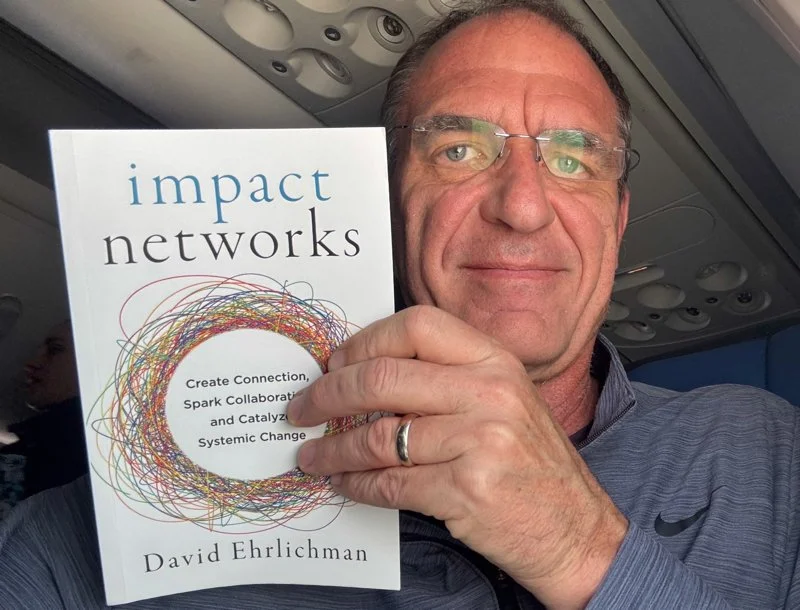
Review by Thomas Cogdell
I read Impact Networks by David Erlichman on the plane flying from Austin to Los Angeles. Usually I’m skeptical of business-y type books … as Dilbert is fond of pointing out, there are 500+ published every year, each one of them promising that theirs is the key to success! To try to read, process, and put into practice even one of them - not to mention all 500! - would be exhausting and chaotic.
But … this book was recommended by a trusted friend Shane Stephens. So I bought a copy and figured a plane trip was a good time to see if it was worthwhile.
Little did I know I would end up weeping in seat 17A! This book didn’t tell me what to do in the future … it explained why what I was already doing was working even though it always proved hard to explain.
For example: Antioch Network. I am privileged to serve on the leadership council of AN. It’s been a running joke for over a decade that nobody can quite describe what AN does or how it works. We just follow a few principles the Lord has given us (like, “Do nothing to grow Antioch Network”) and watch the Holy Spirit work in mighty ways. The typical business / non-profit model doesn’t fit for us.
Impact Networks explains in coherent language why that is. The book begins by saying that the problems that the world is facing are increasingly complex and even chaotic. Traditional organizational structures - hierarchical, top-down, controlled - are very good at addressing simple problems. But they fail when it comes to complex problems.
Instead, a new form of structure is proving successful at addressing complex / chaotic problems. They call these structures “Impact Networks" - thus the title of the book. (The subtitle is also worth noting: “Create Connection, Spark Collaboration, and Catalyze Systemic Change”).
One aspect of this structure is that the focus is not on the organization, but the mission. This diagram from page 41 shows this difference:
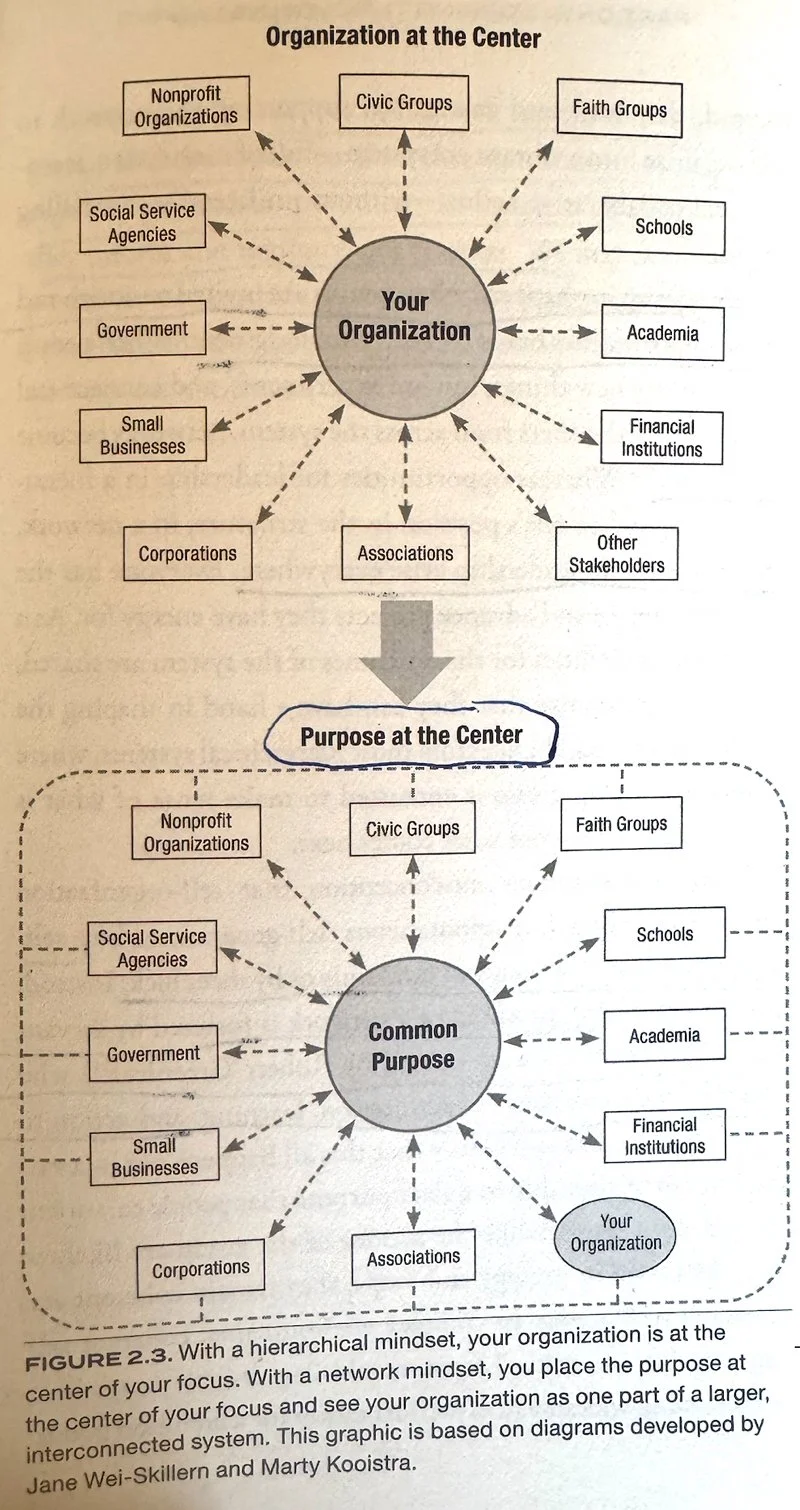
Erlichman writes in this context that “While hierarchical leaders focus on the quantity and quality of their own relationships with others, network leaders focus on increasing the quantity and quality of relationships between others.” This sounds a lot like working for unity in the body of Christ!
Though not written from an explicitly Christian standpoint, there is much in the book that applies to our mission at Christ the Reconciler. We are in contact with multiple networks that fit this book’s description of impact networks, including Antioch Network, Dream Together 2030, and NAN / IPECC. We flow fluidly in and out of active engagement with these networks as needed.
Throughout, our overriding focus is not “utility” (what can these networks do for us) but relationship - how to deepen and prioritize our relationships. I will close with this beautiful passage from the book, that explains the wisdom of this approach:
Impact networks are only as strong as the relationships that hold them together. Relationships influence nearly everything a network aims to achieve, including how information is shared, how decisions are made, and how work gets done. When relationships deepen to a point of mutual confidence, where two people feel they can count on each other to act in service to the purpose - even if they might disagree - we call that trust … I mean trust for impact. This is the type of trusting relationship that allows people to hold the tension through disagreement and conflict, find common ground, and work together to achieve mutual goals … we have consistently found that trust is the single most important factor behind successful impact networks: networks move at the speed of trust.
