Here’s a hidden gem from the 1970s:
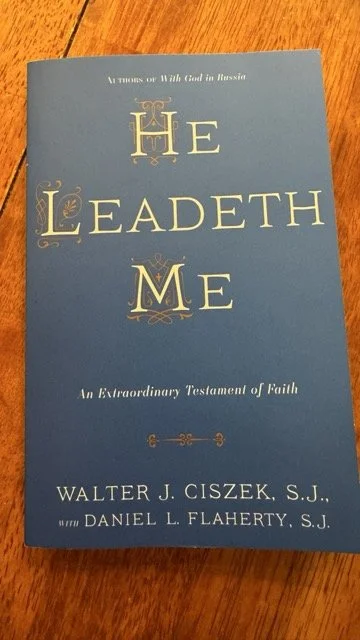
He Leadeth Me is, in certain ways, a Catholic complement to Brother Andrew’s famous book, God’s Smuggler. Brother Andrew was based in western Europe and would make missionary forays behind the Iron Curtain. Fr. Walter Ciszek was from America, and essentially sold himself into slavery in Russia, where he spent 23 years in various prisons and labor camps before emerging in the 1960s much to the astonishment of his own order, the Jesuits, who had declared him dead.
But whereas Brother Andrew focuses primarily on God’s external activities - how God hides the Bibles from the border guards’ eyes, for example - Fr. Walter Ciszek describes God’s internal activities.
So, for example, a chapter might start with an exciting lead about being summoned for interrogation. But then Fr. Ciszek begins to unveil how God confronts his own attitudes - fear, pride, presumption - about the interrogation. The chapter may never get back to what actually happened during the interrogation! For Fr. Ciszek, that’s not the point … the point is, how was the Holy Spirit refining and purifying him through this trial.
Lest this sound boring, it’s not. This book is hard to put down. But it’s also dense and intense, and may cause you to set it aside for a while as the Spirit begins to work on your own heart.
How does He Leadeth Me fit in with the calling of Christ the Reconciler? In a couple of ways.
It is helpful for our Protestant members, who tend to be missions-minded, to read the biographies of Catholic missionaries! This works against the tendency to think that the Protestants are the only ones who do missions these days.
It’s also good for we Protestants to gain a perspective on the inner workings of the mind of a Catholic priest. Particularly interesting in this case is to realize that when Fr. Walter decided to go to Russia, it was well before Vatican II.
The book is essentially about spiritual formation. This is a key activity for us at CTR, and there is much to learn from the book in this regard.
A few times in the book, Fr. Walter does discuss interactions with those from other streams of the body of Christ while in the labor camps. He always honors them, even when that honor is not returned. Below is one example.
“Every camp also had a number of Baptist ministers, but they would rarely have anything to do with us. Most of them, in fact, were fiercely anti-Catholic, at times openly antagonistic and hostile. They and their followers were usually a close-knit group. They held regular prayer meetings, recited the Bible from memory, and instructed one another to be faithful to Christ while opposing anti-Christ - whether in the guise of Communism or Catholicism ... I was saddened and frequently puzzled at their attitude to other believers, especially under the circumstances, yet one could not help but admire their dedication and the Christian witness they gave to their beliefs ... The same could be said of the few Orthodox priests and monks I met in the prison camps. They were not very active, for the most part, but they seemed genuinely holy men. They stayed away from controversy or even much in the way of public religious activity; instead, they led a simple life of prayer and work ... Nevertheless, the other prisoners showed respect for them, left them alone, and wondered sometimes at their life of prayer.”
